By
I was away from the island for three weeks, partly on an Opus Dei
annual sabbatical workshop dealing with Christology (the essence and
being of Christ – one substance but two natures) and partly on holiday.
Together with my wife and two daughters, I spent several days enjoying
the delights of Lake Como in Italy which is easily accessible from Milan
by train (30 minutes). There is however a big change in scenery from
that in Milan, when walking out of the main station in Como San
Giovanni! It's really breathtaking to see the majestic lake itself
surrounded by rising high mountains whose peaks were often ringed with
puffy clouds. The stately villas with their beautiful flower and tree
gardens are something to behold in themselves, several of them being
just summer residences for those who want to get away from Milan’s
summer heat.
......
Two years ago I wrote an article from Rome after having several discussions with a Spanish colleague of mine during a similar Opus Dei
workshop retreat then dealing with marriage. He was a supernumerary
like me, married with children and a navy captain at the Nato command in
Naples. In between lectures in theology and prayers, we often talked in
our free time about security in the Mediterranean. He asked me pointed
questions about Malta’s future security which I then realised underlined
the deficiencies we potentially faced then and which are increasingly
crystallizing now. I subsequently wrote a piece published by this
newspaper and asked whether Malta should start seeking membership of
Nato since we are already a member of PfP. Not surprisingly, even though
my article then was in the form of a question, I was taken to task and
openly ridiculed by the leftist press and politicians who were then in
Opposition. Today, with Labour in government, we suddenly have the
Minister of Foreign Affairs asking the same questions I asked two years
ago. Nobody on the left is laughing now it seems! Dr Vella went on to
express his wish that security arrangements similar to those in other
European neutral countries should be sought.
.....
Read the rest here.
Wednesday, September 3, 2014


Monday, August 4, 2014
Kindred Spirits: St. Josemaría Escrivá and Dorothy Day
By Richard Becker in Catholic Exchange, 26 June 2014

The last thing coffee drinkers need is another mug, but I’ve stumbled across one I just have to have in my collection. It says this: “I’m more Dorothy Day than Opus Dei.”
You have to admit it’s clever – and who doesn’t enjoy a good pun with his morning jolt? Plus, there’s the bonus of subtle irony, for the mug’s joke depends on an assumption that’s really a bunch of hooey. Since everybody presupposes Dorothy Day and Opus Dei to have very little in common, it’s comical to juxtapose the two, right? Sure, and it’s funny enough…for a mug. But, seriously, all mugs aside, there’s plenty of common ground between Day and Opus Dei – really. In fact, it’s common ground that ought to be aggressively mined in this era of New Evangelization.
I’ll grant you, at first glance there appears to be a huge ideological chasm between the two – Servant of God Dorothy Day and the Catholic Worker movement she engendered on one hand; Opus Dei and its founder, St.Josemaría Escrivá (whose feast we celebrate today), on the other. Both fervent Catholics, Fr. Escrivá and Dorothy were also contemporaries, as were the beginnings of their respective apostolates, but other than that it might seem like they were worlds apart.
First, Day, the Bohemian radical. She was a gifted journalist, a socialist sympathizer, and an unwed mother. Her Catholic conversion in 1927 was associated with her determination to have her daughter baptized, but after being received, Dorothy became an ardent disciple anxious to put her energy and talents at the service of the Church. After meeting Peter Maurin, she was motivated to translate the Popes’ social encyclicals into concrete plans of action, and the Catholic Worker – both the newspaper and the movement – was born. Starting in New York City in 1933, the Worker’s approach of literally implementing the Church’s social teaching and emulating the radical charity of the saints rapidly spread to every corner of the nation and beyond.
Escrivá, on the other hand, came of age in a very traditional Catholic family in conservative pre-war Spain. He was ordained in 1925 at the age of 23, and a few years later he received an inspiration to found a new movement devoted to lay formation and apostolate – Opus Dei, the Work of God. Opus Dei would be rooted in the idea that all Catholics were called to holy living, not just priests and religious. Despite misunderstandings and suspicion, and amid religious persecution and international conflicts, Escrivá and his followers doggedly spread their message of sanctification for all, and Opus Dei spread around the world.
The disparate origins of the movements started by Escrivá and Day are superficially reflected in how they are embodied on the local level. Here in the U.S., Opus Dei tends to appeal to professionals and students on the way up the social ladder. Catholic Worker communities tend to appeal to folks at the other end of the mobility scale: Those who struggle just to make ends meet, and students (and others) who are actively seeking a downward social trajectory.
Yet, as I said, these differences are merely superficial, for at their core, Opus Dei and the Catholic Worker movement are committed to the same threefold mission.
First, and perhaps most obviously, both groups are essentially lay-oriented. Catholic Worker houses have never been officially associated with dioceses or religious orders, and so they are almost always lay initiatives. And while it’s true that Opus Dei, as a personal prelature, has its own priests, they are ordained specifically “under title of service to the prelature” (Can. 295 §1) – and the prelature’s very identity is the promotion of sanctity among the laity.
Related to their lay character is the second part of both groups’ common mission as articulated by their founders: A fundamental commitment to the idea that everyone is not only called to be a saint, but that “everyone can become a saint” (Opus Dei). This is not a novel idea of course – in fact, it’s a central tenet of Pope Francis’ teaching. “Being saints is not a privilege of the few,” he said last year on All Saints’ Day, “but everyone’s vocation.”
Read the rest of the article here.
Tuesday, July 1, 2014
Rocco Palma: people affiliated with the Work are some of the healthiest people I've ever met in my own work
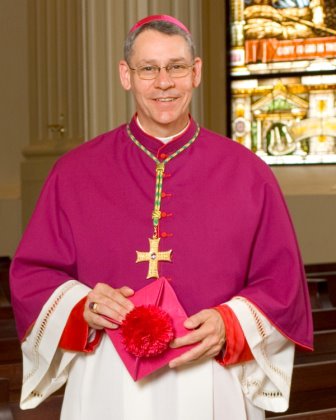
Bill Tammeus in the Kansas City Star reports that Bishop Robert Finn of Kansas City-St. Joseph has confirmed his affiliation with the Priestly Society of the Holy Cross, the supernumerary group of Opus Dei....
Now, why is this a news story? Somebody tell me.
I knew Bob Finn before he became a bishop and count him as a dear friend, and I've long known of his affiliation with the Work. (It was never any kind of state secret.) And, to be honest, I've come to respect the Work more because, if anything, its spirituality gives him the enrichment which enables him to be the remarkably kind, self-giving and holy priest and stellar shepherd of souls that he is. Same goes for Jose Gomez in San Antonio, an incredible person and a fearless pastor.
By its fruits you shall judge it, no? First off, in my experience, people affiliated with the Work are some of the healthiest people I've ever met in my own work. The Work could teach the Trads so very much about what Christianity is, let alone what faith is, what love is, what charity is. That alone would make it invaluable.
But here are two bishops of the same school of spirituality -- Finn and Gomez -- who "get it," who live it and who do wonderful work. In a time when those attributes are sadly not the province of every bishop, it seems there's some good fruit in them thar hills.
If the Work's spirituality is as effective on the broad scale as it is in the ministries and prayer lives of these two men, then every bishop should be Opus Dei. I'm dead serious and would be very happy with the result, because we'd have a better, purer, healthier church for it.
Bring it on.
Sunday, June 29, 2014
Obayism

This is a collection of eulogies for Obay. When people heard
that I was going to deliver the eulogy, a number of people sent me some materials to include here.
His real name is Oliver Rojales. His young wards like to
call him Obay-Wan Kenobi, as they learned from him how to play with words, to
crack puns, or what has become legendarily known as Obayisms.
My sense is that Obayism is not just a funny way of seeing
things. It is a whole way of life that Obay personified.
Based on the recollection of his siblings and mga kababata (childhood friends), Obay
was matalino,
intelligent, a scholar, an excellent student.
But among all the descriptions, one word stands out: Mabait (good and kind). One said: Napakabait (most kind). His relatives explained
that his original nickname was Obey. Because he was so obedient.
He was mabait, but
I believe we have to understand his kabaitan
with one caveat. One of my earliest remembrances of Obay was the fun moments he
would share with Hernan Reyes (may he rest in peace too). I can imagine both of
them right now chuckling together. I was about to say “chuckling themselves to
death”, but yes we can say they are at this moment chuckling themselves to life
in heaven.
The classic practical joke that Hernan played on Obay and which Obay
would tell us with relish, is their visit to Banahaw Cultural Center at night.
They were both inside the car when they reached the closed gate of Banahaw, and
Hernan who was driving told him to look at the pedestrian gate of the Center
towards the right side of the car. Obay, after looking at the gate, turned to
look at the driver’s seat and saw the face of a big bad witch. After hearing a scream, Hernan felt a big blow
to his face. On removing his mask, he muttered, sounding forlorn, Nagbibiro lang naman ako eh (Oh my, I was just kidding.)
Mabait si Obay, but he was no pushover. In fact
he was a stalwart of Opus Dei in the Philippines. He was trusted to start Opus Dei in other
parts of the Philippines and Asia. He was part of the team that started Lauan
Study Center in Quezon City, where dozens of young people found their vocation
to Opus Dei. He was a pioneer in Cebu, in Singapore, and in Hong Kong, and
therefore in China!
Obay was one of the first members of Opus Dei in the
Philippines, a fact that filled him with holy enthusiasm. Despite the weariness he felt, he told us with zest last May 27, on
the fiftieth anniversary of Opus Dei in the Philippines, about the early years
in the Philippines and how he got in contact with Opus Dei. There we saw how much he appreciated and loved his vocation to the Work to the depths of his soul.
One memory of Obay that I am sure is indelibly imprinted in
the memory of people who lived with him is his personalized poems for birthday
celebrants. He would churn out five,
six, seven stanza poems with de riguer
rhymes that always sounded funny, partly because he deliberately made them
corny: maraming pilit. Alam mong pinilit
niya para tumawa kayo (many were forced rhymes, but you knew that he did it
that way for people to laugh).
But that is not just the charm of those poems. Their greatness also lie in what they observed
about the celebrant. Every stanza revealed the attention Obay placed in the
lives of people who lived with him. He knew what you liked, he knew what you
did, he knew what made you feel good, he knew what made you happy. And that was
his joy.
Dr. John Mesquida, the
Director of the Center where we lived, who followed Obay very closely, wrote
his own eulogy and showed there the great obstacles that Obay had to face in
his illness, Parkinson’s Disease, and how he struggle with them. John recounted
that:
·
Obay’s mobility was progressively affected.
·
His muscles tightened and his balance was
impaired, so that it became increasingly harder to walk or move his body.
·
It was difficult to carry out any kind of
intellectual activity. His mind was always sharp, and his wit never abated, but
he had to exert much more effort than an average person.
·
He had difficulty in breathing and eating caused
by the stiffening of the muscles in the chest and stomach. In five years, he
lost around 30 pounds. He found eating strenuous.
·
Following the doctor’s advice, we tried to keep
him busy, physically and intellectually, in order to delay deterioration. ...
He was handling several talks weekly and had spiritual guidance meetings with
many individuals every week. The effort he had to exert to prepare and above
all to deliver the talks was draining. During talks he had to catch his breath
and take a few seconds rests in order to be able to finish the delivery. What
made him suffer most was how difficult it had become to carry out any kind of
mental work.
·
In spite of these many discomforts he was always
available to help others. And he did it willingly and with a smile. He took
care of the house, performed errands, gave talks in recollections and circles
for members and for co-operators, both young and old. And he really touched the
hearts of so many, who noticed how much sacrifice he demanded from himself.
Fr. Jay, Fr. Javier de Pedro, told us about three people he
knew who had Parkinson’s. And invariably, these people had huge problems. They
would be depressed because they can’t do so many things. But he never saw that sadness
in Obay. Fr. Jay remembers that Obay kept on doing little favors after lunch
when just the two of them were left at home, like pushing the coffee cart,
prepare coffee and put it in a little table beside him. He then said that Obay’s
way of handling illness can only be due to “great sanctity”.
For Obay his sickness was something to poke fun of, as all
events of the day were occasions of cheer and humor. When people asked him of late, Oh how are you
Obay?, Obay would reply with a twinkle in his eye (an example of which appears in the picture prepared for his wake):
I have Parkinson’s, so I will be parking soon!
One of his gems sparkled just three weeks ago. It was the
fourth week of Easter, and someone remarked, Hey there are still two unfinished
bottles of leftover wine from the Easter celebration. So I remarked, “Wow, we are so sober in this house.”
And Obay said, “Kaya maraming sobra.”
Over breakfast one day, Dr. Ray Pangilinan asked John what
time he was leaving so he can hitch a ride to the office. John replied: 8:10.
Obay, always reassuring, said: “You don’t
have to rush, Ray, you will have “ate-en” (pronounced as 8:10) by then.”[1]
All this joy, fun, kindness and attention in the midst of pain and
inner struggle: That’s Obay. That is why I can’t help but think of one thing
when thinking of Obay: the Eucharist. Obay
was unobtrusive, but immensely alive. He was silent and gentle, but the daily reaching
out, the daily care for details of affection, the daily cheer revealed a
herculean effort—which was light for him, for it was borne by the grace of God
that filled him, due his constant prayer and intimate sacramental life.
There are two ways of ending this eulogy. One is the way he
ended his poems. These personalized
birthday poems would always end with a stanza that invariably started with the
same line and finished with another classic line. The lines in between would
change per celebrant, and so there was always a heightened expectation on what
the last stanza contains.
There were two persons who lived with Obay who sent me two
poems done in the Obayesque way.
The first one is from Dr. Paul Dumol:
Today, today is
Obay’s birthday.
Take him, Lord,
where the angels play
And keep him
laughing all the day.
Teach him to be
patient as we pray.
Obay, we hope to
join you there some day.
Happy, happy, happy
birthday.
The other
person who sent a poem calls himself the Pseudo-Oliverian: Conrad Ricafort.
Today, today is your birthday.
Oliver Rojales, oh by the way,
You must be feeling a-okay.
Cheerful, peaceful, happy and gay
With Hernan, Johnny, Bob and Ray
Fr Marcy and Fr Luis, don't forget to say
Poems and rhymes and music play,
Singing songs, even "My Way."
We can't find the words to say
Try as hard as we may
To greet you on this august day.
But with joyful hearts we now all say
Happy, happy, happy birthday!
The second way of ending this eulogy is the way my last recital
of Obayisms ended last April. Almost every year since 2010, I have been reading
his most remarkable puns which I collect throughout the previous year.
In the last summer seminar we both attended, the last
Obayism in the list was about a comment of Dr. Jesus Estanislao, who was also present
in that seminar and had a good laugh. Someone commented to Obay that Dr. Jess
once remarked that puns are the lowest form of humor. Then another person said:
Obay, you can’t take that sitting down. So Obay stood up, and said: I will then
take it standing up.
That last recital ended with a standing ovation for Obay, an
applause he received with eyes closed and with great humility.
So may I invite you all to give a standing ovation to the
Master: Obay, the master of kindness and cheerful sanctity.
[1]
Other Obayisms:
- The mother of Naz sent longganisa for the residents. After some time has elapsed, Paul said one day, “Di pa lumalabas yung longganisa baka masira na lahat by the time they are brought out.” Obay remarked: “Oo nga, they might be long gone. Isa na lang ang matira.”
- In Cebu (where they famously pronounce bait or bet as bit, and vice versa), four guys ganged up on the security guard of a school, Springdale, using barbecue sticks. But they realized that the guard was not the person they were after. It was a case of wrong identity. Obay said: those guys made a “mistick.”
- During the EDSA people power revolution, Fr. Bingo went to the crowd to look for somebody called Resty, a spokesman of the army. Fr. Bingo saw a guy there and asked him if he knew where Resty was. He later found out that the person he asked was not an ordinary person. It was Colonel Gregorio Honasan himself, the lead revolutionary! Obay suggested, “So then, you asked him, O nasan?” (where is he?)
- When I was about to get my new car, Jojo asked me: When will you get your Hyundai (pronounced as yun-dei). I mentioned a date. Obay said: Yun day din na yon, ah! (that same day!)
Saturday, June 7, 2014
Opus Dei prelate beatification expected to draw 100,000 attendees
By CNA Daily News in Pantheos

The first successor of St. Josemaria Escriva as leader of Opus Dei, Bishop Alvaro del Portillo, will be beatified Sept. 27 in Madrid at a ceremony that is expected to bring together nearly 100,000 faithful.
The prefect of the Congregation of the Causes of the Saints, Cardinal Angelo Amato, will preside at the beatification. Cardinal Antonio Maria Rouco Varela of Madrid will concelebrate, along with the current prelate of Opus Dei, Bishop Javier Echevarria,
The spokesperson of the organization committee for the beatification, Teresa Sabada, and the vice postulator of the cause, Father Jose Carlos Martin de la Hoz, outlined numerous details about the event.
Sabada said 100,000 people from more than 50 countries are expected to attend the beatification. In addition, 3000 families have opened their homes to welcome those traveling to Madrid from abroad, and 2000 young people have already signed up to work as volunteers for the event.
Read the rest in: http://www.patheos.com/blogs/catholicnews/2014/06/opus-dei-prelate-beatification-expected-to-draw-100000-attendees/
Friday, May 2, 2014
Shrine of St. Josemaria Escriva

Barely two months after it was dedicated and declared a diocesan shrine by Bishop Florentino F. Cinense of the Diocese of Tarlac, the Shrine of St. Josemaria Escriva in Gerona, Tarlac, has already become a pilgrimage place for thousands of devotees from all over the Philippines. Strategically located on the national road to Baguio and just a few kilometers from the Pura exit of the TPEX toll road, the still unfinished Church is already a focal point for numerous liturgical services for both the citizens of Tarlac and Filipino and foreign pilgrims from all over. It is a testimony to the widespread devotion to the “Saint of Ordinary Life,” as St. John Paul the Great called him the day after the late Pope canonized the founder of Opus Dei.
St. Josemaria started to preach in 1928 that every baptized Christian is called to be a saint. This universal calling to sanctity, which sounded strange in 1928, was confirmed by the Second Vatican Council several decades later. St. Josemaria was also the first to speak very clearly about the work of everyday life being the main instrument for one’s sanctification, the sanctification of the work itself, and the sanctification of others through one’s work. In fact, the person that was the most faithful to the spirit of St. Josemaria and who became his first successor to head this Personal Prelature, Bishop Alvaro del Portillo, is about to beatified next September 27, 2014, in the City of Madrid.
The homily delivered by Fr. Melvin Castro, executive director of the Episcopal Commission on Family and Life (ECFL) of the CBCP, during the dedication rite explained some of the features of the shrine:
“…In the facade of this altar, there is an empty space…For that vacant space, we are awaiting the beatification of Msgr. Alvaro del Portillo, the first successor of St. Josemaria, founder of Opus Dei. Some of us have had the great privilege of having seen Bishop Alvaro in life. He died March 23, 1994. I will not forget that day. Allow me to be personal for a while. When Msgr. Alvaro died, I was still in my seminary formation. However, I had to leave the seminary in April, 1994, some weeks after Don Alvaro died, because of a grave family problem. I thought at the time that I would not be able to go back to seminary life. But I prayed to him…True enough, I was able to return by October of 1994, and I attribute this blessing to the intercession of Bishop Alvaro. Having said this, we wish to take this opportunity to ask Bishop Cinense’s permission to go to Madrid for Bishop Alvaro’s beatification. So, see you in Madrid in September.”
Fr. Castro also emphasized that the St. Josemaria parish does not belong to Opus Dei: “This is our church, everyone’s parish! That’s why the main painting in the altar’s facade…shows, in the upper portion, this shrine being held by an angel, representing each one of us, each one of us who helped build this church. On the other side of the facade, we notice another angel holding a piece of parchment paper, where the names of the barangays covered by the parish church is written…because this is the church of everyone…” True enough, in a pilgrimage I made to the church last April 6, as I signed the book of pilgrims just at the entrance of the Chapel of Adoration, I read names of individuals from all over the Philippines, as far as Iloilo, Davao, Cebu, etc. Already, in less than two months after its formal dedication, the Shrine of St. Josemaria Escriva has already attracted devotees from all over the Philippine Archipelago.
In no time at all, we should expect pilgrims coming from various parts of Asia. As Fr. Castro explained: “Let us not forget that this is the very first church established in honor of St. Josemaria in the whole of Asia. Thus, it is an honor…that this singular privilege is being enjoyed by the Diocese of Tarlac, because one way or the other many of us in the diocese owe St. Josemaria a lot of favors. In one way or the other, St. Josemaria and many of his children have touched our lives; hence many of us remember him with great fondness. Thus, this afternoon is a celebration for all and of all.”
At the Holy Mass I attended in the shrine last April 6, I was impressed to see married couples with their children filling the church. When the parish priest Fr. Renato Dimaculangan asked me to say a few words after the Mass, I told the Mass goers that St. Josemaria is a very effective intercessor for a happy family or as he would put it, “bright and cheerful homes.”
I am encouraging people from the diocese and from all over the Philippines to go to the shrine to pray especially for the favors related to unity between husband and wife and harmony in every family. During his life, St. Josemaria never tired of speaking about marriage as a path to sanctify. Next to the Holy Family, whose image is the centerpiece of the shrine, St. Josemaria will be known as the patron of a happy family, of a bright and cheerful home. For comments, my e-mail address is bernardo.villegas@uap.asia.
Wednesday, February 12, 2014
The farm school without a farm
By Linda Bolido in the Inquirer
Don’t expect to find a farm or students planting rice at Dagatan Family Farm School in Barangay Dagatan, Lipa City.
Despite the name, no actual agricultural work happens on campus. The school is more about preparing students in the communities it
serves for the family livelihood or enterprise which, in many rural
areas, is still farming.
But to learn about agriculture and other enterprises, students go
home or on field visits to other people’s farms or businesses. In
Dagatan, the Philippines’ pioneering farm school, “farm” now encompasses
agriculture-related and other small- and medium-scale enterprises.
The 80 students of Dagatan, which opened in 1988 with 36
enrollees, come from families involved in farming, poultry and livestock
raising, sari-sari stores, buying and selling, and other modest
enterprises.
They are studying not only to earn a high school diploma but
also to help manage or increase the productivity of the family business
and, perhaps, eventually take over from their parents.
As school director Randy B. Pesa says, “They study even as they
work,” a reality in many farming communities where schools often “lose”
students during critical seasons when additional hands are needed on the
farms.
Pesa says many students find, even before they graduate,
solutions to their businesses’ problems and are able to help their
livelihood grow. As a result, many drop the idea of going to college or
postpone it to nurture their businesses.
It is the outcome that the Department of Education is hoping for
with the Kindergarten to Grade 12 (K to 12) basic education scheme,
which aims to offer graduates more options by providing them skills that
will make them employable, especially in their own communities, after
high school.
Dagatan teaches students the basic academic competencies DepEd requires. It also follows DepEd’s 10-month academic calendar.
Where the school significantly differs from the mandated routine
is by alternating formal classroom and home instruction. Every other
week, students stay at home to help in household chores and the family
enterprise.
While academics are not completely out of mind during this time
as students have class work to do, the homestay is meant to be a
mutually enriching experience for both youngsters and adults.
In a journal called a communication book, students record their
experiences, what they learned helping with household chores or the
family business. It shows the kids’ progress and what they learned
during field visits, discussions with professionals and resource
persons, which they are expected to share with their parents.
‘Paksa’
Pesa says that every year, the school board chooses a paksa,
the unifying theme for the year’s instruction that will guide field
visits and professional discussions. For agricultural matters, for
instance, discussions with experts from the University of the
Philippines Los Baños and successful farmers are organized.
Exposure to different means of livelihood and enterprises, Pesa says, helps children decide what they want to be.
The students’ individual profiles and consultations with parents help determine the year’s paksa.
The theme anchors class discussions and is integrated into all
the work. “We try to connect the paksa to every lesson,” Pesa says,
although he admits this is not always easy to do in mathematics.
Guided by their tutors, the students prepare their questions before outings. “Kids have to learn to think and to write….

If they learn how to ask questions they will develop self-confidence… . They learn to write, develop creativity and communication skills,” Pesa says.
“If there are questions that were not answered during the field trip, there will be [professional discussions],” Pesa adds.
Parents’ commitment
Field visits and discussions can involve more than just
enterprise. Pesa says they visited, for instance, the community’s “model
family” to help students clarify or receive guidance on some domestic
issues.
During the homestay, tutors visit the students to make sure
learning continues. Pesa says the first requirement of parents with
children in Dagatan is their commitment.
Parents have to be actively involved in their kids’ education. At
home, they have to make sure school work is done and children complete
every chore.
Parents have to be present during the tutor’s family visits. They
are expected to give an honest assessment if they want to help their
kids develop properly.
The homestay and extensive interaction with the community and
experts are all part of an important aspect of learning at Dagatan, what
Pesa calls formation. Dagatan education has a very strong spiritual and
moral underpinning, owing to the fact that its founders had links to
the Catholic religious group Opus Dei founded by St. Josemaria Escriva.
Pesa says parents also learn and “achieve formation” because they
read and discuss what the kids write in their communication books. Many
parents say they learned, through their kids, new ways of doing things
and solutions to problems.
Parents also have to write or have their children write their personal reflections.
Wednesday, February 5, 2014
Opus Dei Headquarters

However, the real worldwide headquarters is in Rome. Here is an article from the website dedicated to St. Josemaria.
The prelatic church of Opus Dei
The mortal remains of Saint Josemaría Escrivá are contained in a casket located beneath the altar of the Church of Our Lady of Peace. Millions of people throughout the world turn to Saint Josemaría’s intercession to gain graces of every kind from God. Many come to the Church of the Prelature to continue their petition or give thanks for graces received through his intercession.On December 31, 1959, Saint Josemaría celebrated the first Mass in the church of Our Lady of Peace. After Opus Dei was established as a personal prelature, this became the Church of the Prelature. Saint Josemaría’s devotion to our Lady is the reason for the title of this church and the main picture. The crypt of the church holds the Blessed Sacrament Chapel and confessionals. Saint Josemaría preached with untiring zeal on our need for the sacraments of Reconciliation and the Eucharist, given by God to his children as a source of peace and never-ending joy.
The crypt is also the burial-place of Bishop Alvaro del Portillo (1914-1994), Saint Josemaría’s first successor at the head of Opus Dei.
“Holy Mary is the Queen of peace, and thus the Church invokes her. So when your soul or your family are troubled, or things go wrong at work, in society or between nations, cry out to her without ceasing. Call to her by this title: 'Regina pacis, ora pro nobis — Queen of peace, pray for us.' Have you at least tried it when you have lost your calm? You will be surprised at its immediate effect.” Saint Josemaría Escriva
Thursday, January 30, 2014
The HHS mandate contradicts the Christian view of work
By Jay W. Richards in The Daily Caller. Excerpts only.
The mandate assumes that there is a solid line between
sacred, explicitly religious work in a religious setting, and “secular”
work that takes place everywhere else. This might look like a nice way
to resolve the dilemma: just build a wall between the sacred and the
secular, and exempt the former, but not the latter. Historic Christian
theology, however — whether Protestant or Catholic — has a different
view.
Work, whether explicitly religious or not, is an expression
of our nature as creatures made in the image of God. Work is part of
God’s original blessing and command to our first parents. Adam and Eve
were put in a garden, commanded to “tend and keep it,” and told to have
dominion (that is, be good stewards) over the earth. This original
command to work took place before the fall into sin.
This biblical view of the dignity of work, including manual
labor, is unique among the major threads of western culture. The
ancient Greek and Roman cultures saw labor, particularly manual labor,
as fit for slaves but not for citizens.
Although this theology of work has always been in danger of
being eclipsed, it is firmly anchored in Church history. The motto of
the ancient Benedictine order is “Ora et labora”: pray and work. The
Protestant Reformers Martin Luther and John Calvin emphasized the
“priesthood of all believers” and denied a stark dividing line between
private worship and public work.
The Catholic organization Opus Dei (“the work of God”),
founded in the twentieth century, describes its purpose as helping
“people seek holiness in their work and ordinary activities.” And today,
there are dozens of Christian non-profits, including my own — the
Institute for Faith, Work & Economics (IFWE) — that emphasize the
sacredness of work. According to the broad Christian tradition, then,
church ministry can be a calling, but so too can banking or medicine or
musical performance or coffee roasting or car manufacturing. If God has
called you to a specific task and you pursue it with gusto, then your
work is your spiritual calling.
Álvaro del Portillo, the "rock" of Opus Dei and the mission in Asia
by Nirmala Carvalho in Asianews.it
The director of the Opus Dei Centre in Mumbai talks about the successor to Saint Josemaría Escrivá, founder of the personal prelature, who will be beatified in September. Del Portillo was a person naturally "faithful, first to Our Lord and then to the spirit of Opus Dei." During the Second Vatican Council, he played a fundamental role, which he continued with young people from all over the world.

Mumbai (AsiaNews) - "Asia was always very close to the heart of Mgr Alvaro". This was clear when the first members of the Opus Dei arrived in New Delhi in 1993. On that occasion, he asked the world "to pray for the beginning of the Prelature in this great subcontinent," said Mr Kevin de Souza, director of the Opus Dei Centre in Mumbai. Speaking to AsiaNews, he talked about Mgr Alvaro del Portillo, who will be beatified on 27 September in Madrid. Here is the interview.
How relevant is the life and mission of the Blessed Alvaro today?
Álvaro has always been regarded as an icon of fidelity. Saint Josemaría, the founder of Opus Dei, nicknamed him saxum, which means 'rock' in Latin.
At only 26 years of age, he was named secretary general of Opus Dei. He had to oversee the expansion of the apostolic activities of Opus Dei in Madrid and other Spanish cities whilst completing his engineering studies and earning a living. He did all these with a great sense of calm.
"He has left a very deep imprint," said Javier Echevarría, the current Bishop Prelate of the Opus Dei, after Álvaro's death.
"One of his essential features was a strong sense of filiation, accompanied naturally by an effort to be faithful, first to Our Lord and then to the spirit of Opus Dei, left to us by our founder. Bishop Álvaro incarnated to perfection all aspects of the spirituality of Opus Dei, making them flesh of his flesh, bone of his bone."
During his years in Rome, various popes, from Pius XII to John Paul II called upon him to carry out numerous tasks as a member or consultor of 13 entities within the Holy See.
He played an active role in the Second Vatican Council. John XXIII appointed him a consultor to the Sacred Congregation of the Council (1959-1966).
Before Vatican II, he was president of the Commission for the Laity. In the course of the Council (1962-65), he was secretary of the Commission on the Discipline of the Clergy and of the Christian People.
After the Council, Paul VI appointed him consultor to the post-conciliar Commission for Bishops and the regulation of dioceses (1966).
For many years, he was also a consultor for the Congregation for the Doctrine of the Faith.
Read the rest in: http://www.asianews.it/news-en/%C3%81lvaro-del-Portillo,-the-rock-of-Opus-Dei-and-the-mission-in-Asia-30157.html
Monday, January 27, 2014
Catholic institution will use state-of-the art technology to educate pilgrims to Israel

By Elhanan Miller. Excerpts of an article in Times of Israel
Opus Dei, a Catholic institution, will provide
spiritual guidance to Christian pilgrims in a new visitors’ complex
being constructed outside Jerusalem.
Saxum,
a project comprising a conference center and multimedia resource
center, is located between Kibbutz Maaleh HaHamisha and the Arab village
of Abu Ghosh, 15 kilometers (10 miles) west of Jerusalem. Construction
on the site began in 2013, and is scheduled for completion in 2015.
According to the Saxum website, the conference
center will include 50 guestrooms, two chapels, and classrooms. The
multimedia center will serve to train tour guides and use state-of-the
art technology to introduce visitors to Jerusalem’s Christian sites.
One of Saxum’s goals is to promote Christian
pilgrimage to Israel. The Saxum Foundation, an Italian nonprofit,
estimates that some 30,000 visitors will pass through the center every
year.
Bishop Alvaro del Portillo, Opus Dei's second leader, to be beatified on September 27 in Madrid
By National Catholic Register
VATICAN CITY — Bishop Alvaro del Portillo, the second leader of Opus Dei, will be beatified in his birthplace of Madrid on Sept. 27, the Vatican has announced.
The current prelate of Opus Dei, Bishop Javier Echevarría, said the Vatican’s Jan. 21 announcement of the beatification ceremony was a “moment of profound joy.” He said Bishop del Portillo “loved and served the Church so much.”
Bishop Alvaro del Portillo, known as “Don Alvaro,” was born in Madrid on March 11, 1914, the third of eight children. As a student, he was active in the St. Vincent de Paul Society. He taught catechism to children in poor neighborhoods and distributed donations and food to families in need, Opus Dei states on its website.
He studied to be an engineer and received doctorates in philosophy, liberal arts and canon law.
Wednesday, January 1, 2014
Cooperators of Opus Dei (Vatican Website of the Pontifical Council of the Laity)
This is taken from the official Vatican website of the Pontifical Council for the Laity
Cooperators of Opus Dei
IDENTITY
The Cooperators of Opus Dei are men and women who belong to an association inseparably linked to the Opus Dei Prelature, although they are not incorporated in the Prelature. The Cooperators, together with the faithful of the Prelature, cooperate through prayer, work and financial assistance, undertaking educational, welfare and cultural/social promotional work, thereby contributing to the common good of society.
Cooperators of Opus Dei also include non-Catholics, non Christians and nonbelievers, who share the human and social development objectives of apostolic initiatives, that are open to all and are promoted by the faithful (laity and clergy) of the Prelature jointly with many other citizens.
Cooperators benefit from the prayers of Opus Dei and, if they wish, they can also receive the formation provided by the Prelature to deepen the message of Jesus and their own spiritual lives, and to bear personal witness, without creating groups, consistently with their Christian vocation. This formation requires Catholic Cooperators to engage in prayer, partake of the sacraments, pray to our Lady, demonstrating by their deeds their love for the Church, the Successor of Peter and the bishops.
One essential part of the spirit of Opus Dei which is present in formation, is the sanctification of professional life and family and social duties, in other words, identifying with Christ in ordinary daily life. Cooperators also cooperate personally with other apostolic initiatives in their own dioceses.
MEMBERSHIP
The Cooperators of Opus Dei are present, like the Opus Dei itself, in 63 countries as follows: Africa (7), Asia (8), Europe (22), Middle East (2), North America (11), Oceania (2) and South America (11).
WEB SITE
http://www.opusdei.org
HEADQUARTERS
Cooperatori dell’Opus Dei
c/o Curia Prelatizia dell’Opus Dei
Viale Bruno Buozzi, 73 - 00197 Rome - Italy
Tel. [+39] 06808961 - Fax 068070562
Email: info@opusdei.it
OFFICIAL NAME
Cooperators of Opus Dei
IDENTITY
The Cooperators of Opus Dei are men and women who belong to an association inseparably linked to the Opus Dei Prelature, although they are not incorporated in the Prelature. The Cooperators, together with the faithful of the Prelature, cooperate through prayer, work and financial assistance, undertaking educational, welfare and cultural/social promotional work, thereby contributing to the common good of society.
Cooperators of Opus Dei also include non-Catholics, non Christians and nonbelievers, who share the human and social development objectives of apostolic initiatives, that are open to all and are promoted by the faithful (laity and clergy) of the Prelature jointly with many other citizens.
Cooperators benefit from the prayers of Opus Dei and, if they wish, they can also receive the formation provided by the Prelature to deepen the message of Jesus and their own spiritual lives, and to bear personal witness, without creating groups, consistently with their Christian vocation. This formation requires Catholic Cooperators to engage in prayer, partake of the sacraments, pray to our Lady, demonstrating by their deeds their love for the Church, the Successor of Peter and the bishops.
One essential part of the spirit of Opus Dei which is present in formation, is the sanctification of professional life and family and social duties, in other words, identifying with Christ in ordinary daily life. Cooperators also cooperate personally with other apostolic initiatives in their own dioceses.
MEMBERSHIP
The Cooperators of Opus Dei are present, like the Opus Dei itself, in 63 countries as follows: Africa (7), Asia (8), Europe (22), Middle East (2), North America (11), Oceania (2) and South America (11).
WEB SITE
http://www.opusdei.org
HEADQUARTERS
Cooperatori dell’Opus Dei
c/o Curia Prelatizia dell’Opus Dei
Viale Bruno Buozzi, 73 - 00197 Rome - Italy
Tel. [+39] 06808961 - Fax 068070562
Email: info@opusdei.it
Thursday, December 26, 2013
Ten Reasons the Catholic Church is the One True Church of Jesus: a handy one pager for the New Evangelization

This handy one pager is a tool for the New Evangelization summoned by Pope Francis. It contains
the key reasons of the great recent converts to the Catholic Church, Scott
Hahn, Peter Kreeft, Steve Ray, Jim Akin, Tim Staples, Marcus Grodi, etc on how
they found the real Jesus in his one true Church.
Instead of getting involved in heated oral debates with Evangelicals and other Christian groups, St. Josemaria recommended a calm study of issues. This leaflet enables one to pass on the reasons for what we believe in one simple sheet.
St. Josemaria told us: "In the Church we discover Christ, who is the Love of our loves. And we should desire for all men our vocation, this intimate joy which intoxicates the soul, the limpid sweetness of the merciful heart of Jesus."
Ten Reasons the
Catholic Church is the One True Church of Jesus
and not the Evangelical, Protestant, Born Again and other
Christian groups
A one-page leaflet to support Pope Francis’ call for a New Evangelization that “all may come to the knowledge of the truth” (1 Tim 2:4) and to support Jesus’ prayer that “all may be one” (Jn 17:21)
1. The Bible
is a Catholic book. It
was Pope Damasus’ Council of Rome in 382 AD which drew up the official list of
the books of the Bible. If not for this Council, we wouldn’t know if what we
are reading is the true Word of God or a false text. All Christians today trust
the authority of the Catholic Church when they read the Bible.
2. The Bible refutes
the “Bible alone” principle. Bible says
that the “Word of the Lord” is “spoken” (Jer 25:3), not
just written. St. Paul urged us to “hold to traditions which you were taught by us, either by word of mouth or by letter” (2 Thes 2:15). The Bible also tells of a Council’s authority, where
Peter settled a doctrinal dispute and declared what “we believe” (Acts 15).
The Bible teaches that not the Bible or the
Protestant interpreters of the 16th century and of the present, but
“the Church is the pillar and the
bulwark of the truth” (1 Tim 3:15). It
also warns against “twisted” interpretations of Scriptures (2
Pt 3:16). While the Church has one teaching, there are
now 43,000 evangelical groups with 2.3 added daily. Their views on the Trinity,
on gays, etc. contradict each other. Since truth (e.g. Jesus is God) cannot be
falsehood at the same time, real falsehoods are sadly being taught among these
groups.
3. Jesus built
his Church on a man he named Rock. Jesus said “On
this rock, I will build my Church and I will give you the keys of the kingdom
of heaven, and whatever you bind on earth shall be bound in heaven” (Mt
16:18-19). Jesus changed
the name of Simon to Petros, Greek
for Rock. He gave Petros or Peter, “the keys of the kingdom”, which the Jews
knew to be the power of a prime minister of the King and chief teacher (Is 22:21).
Jesus told him alone to “feed my sheep” (Jn 21:15-17). The Bible shows him leading the Church.
The early Christians referred to Peter’s Roman
Church as “presiding” (Ignatius, 1st -2nd c.), “of superior
origin” and standard of “true Faith” (Irenaeus, 2nd c.), “Chair of
Peter”, “the principal” (Cyprian, 2nd-3rd c.), and “the
primacy” (Augustine, 4th-5th c.). While the Catholic
Church can give evidence of its unbroken link to Jesus and Peter, other
Christian groups began their existence with their founders like Luther (1517),
J. Smith (1830), and F. Manalo (1914).
4. Jesus and the
Church are one. It is not true
the Catholic Church left the true Faith, since Jesus promised that “I am with
you always to the close of the age” (Mt 28:20), evil
“shall not prevail” against his
Church (Mt
16:18), and his Spirit “will guide you into all the truth” (Jn 16:13). He
made the Church his body (Eph
5:30) and said: “He who hears you hears me” (Lk
10:16). He told Saul who persecuted the Church
“why do you persecute me” (Acts 9:4).
5. The Bible says we are saved “not by faith alone”.
The Bible used Luther’s phrase “by faith
alone” only once: “a man is justified by works and not by faith alone” (Jas 2:24). The
Bible also says that “what counts is faith
working through love” (Gal 5:6). While Catholics and Protestants agree that Jesus alone
saves us, Luther in the 16th century inserted without basis the word
“alone” in his German translation of Rom 3:28 (“a man is justified by faith”) in
order to support his personal interpretation that a Christian is incapable of
cooperating with God in his salvation.
6. The Bible and
the early Christians believe in purgatory. As
shown in their tombstones, the early Christians followed the Bible: “Pray for
the dead that they may be loosed from
sins” (2 Mc 12:46), for
“nothing unclean can enter heaven” (Rev
21:27). It does not
make sense to pray for the dead if they only go, as evangelicals say, either to
heaven (with faith in Christ) or to hell (without faith). The Bible also spoke about forgiveness in the age to come
(Mt 12:32) and those judged by God are “saved but as through fire” (1
Cor 3:13-15).
7. The Bible
and the early Christians believe in the Catholic sacraments. St.
Peter infallibly taught in the Bible that “Baptism
now saves you” (1
Pt 3:21) and thus is not a mere inciter of faith.
Jesus gave the Apostles the power to “forgive
sins” (Jn
20:23) in Confession. St.
James spoke about “anointing with oil”
for the sick (Jas
5:14-15).
Jesus repeatedly said that “he who
eats my flesh has eternal life”. This is no mere symbol or figure of
speech, because he did not give in when “many of his disciples” left him due to
this “hard saying” (Jn
6:48-68), and St. Paul taught that he who eats the
bread unworthily is “guilty of profaning the Lord’s body” (1 Cor 11:28).
Ignatius of Antioch said “the Eucharist is the flesh of the Redeemer,” Irenaeus
“we receive the bread as our Redeemer, Jesus”, and Cyprian “Christ is our
bread”.
8. The
Catholic Church is salt and light. Modern secular
historians of science, economics, university education, human rights,
international law, hospitals and Western art are showing that Catholic priests,
scientists and thinkers were behind the foundation and great achievements in
these areas (Thomas Woods,
How the Catholic Church Built Western
Civilization). Christ
continues to work his miracles through his Church: Eucharistic bread turning
into blood, appearances of Mary in many places, saints with stigmata and whose
bodies are incorruptible, cures and images of Christ and Mary that are
scientifically unexplained.
9. The Catholic Church is catholic. Jesus
“desires all men to be saved and come
to the knowledge of the truth” (1 Tim 2:4), thus his real Church is universal,
evangelizing in all parts of the world with more than 1,200,000,000 members
today. Compare
this with the 2nd biggest Christian group, the Easter Orthodox
Churches with 230M (1/5 of its size) mainly found in
Eastern Europe; the Anglicans 85M (1/16); Southern Baptists 16.3M (1/73), Mormons
14.7M (1/81) and Iglesia ni Cristo 6M (1/200).
10. Jesus and the Bible glorify his mother. Catholics do not worship Mary, but follow Jesus’
ways. He obeyed the fourth commandment: Honor your father and mother. Honor in
Hebrew is kaboda, which means to glorify. The Bible calls Mary “Mother of my Lord” (Lord
= God) and says all generations will call her blessed (Lk 1:43.48).
It shows that she is the New Ark of the Covenant, the woman clothed with the
sun, crowned in heaven with twelve stars (Rev
11:19-12:1). To honor his mother, Jesus’ last message to us on
the cross is: Behold, your mother (Jn
19:27).
Download the one-page leaflet here (Dropbox) or here (Scribd).
Raul Nidoy. Doctor of Theology, University of Navarre, Spain.
Monday, December 2, 2013
From Opus Dei, a diplomat in communist and moslem countries, while fighting cancer: the travels of Ana

Does life end the day you are diagnosed with cancer? How do you combine illness, work and a strong spirituality?
In December 1992 Ana Gonzalo Castellanos (Velliza, Valladolid, 1955), who was in Brussels, was advised to return to Spain to say goodbye to her mother for she will not be able to do it afterwards.
There began her "stoppage time". But how many things she was able to do before she died which happened 19 years later!
Sent by the European Commission, this woman formed in the spirituality of Opus Dei and a numerary in that institution, traveled to many different countries in "misiones de cooperacion" and took down her personal impressions on some notes which were in the form of letters she wrote to her family and friends.
Ana Gonzalo met Asian opulence and poverty in Brunei, Islamic and mediterranean countries in their entry to the 21st century, the communist stronghold in Vietnam, the intense Catholic faith of Filipinos ...
Her sister Blanca, fascinated by these travel stories, put them together them in the book Una prolongada carta de familia. Mi hermana Ana... un testimonio de coraje en las instituciones europeas (Ediciones de Buena Tinta) and explores the life of a person with an amazing and optimistic attitude, someone who struggled with illness while still enjoying her profession and hobbies.
Read the rest in the original Spanish here.
Sunday, November 17, 2013
Pope Francis refers to St. Josemaria as "precursor of Vatican II"
November 17, 2013. Below is an English translation of a message of the Secretary of State, Monsignor Pietro Parolina addressed to Msgr. Javier Echevarria, Grand Chancellor of the Pontifical University of the Holy Cross, where he refers to St. Josemaria as a precursor of the Second Vatican Council.
On the occasion of the International Congress dedicated to "St. Josemaria Escriva and theological thought," organized at the end of the Year of Faith by the Pontifical University of the Holy Cross, an academic institution inspired by him, the Supreme Pontiff Pope Francis directs his affectionate greetings to everyone, with the hope that the beautiful example of priestly life of the Founder, precursor of Vatican II in proposing the universal call to holiness, inspire in all the faithful of the great family of Opus Dei a renewed awareness that the believer, by virtue of baptism which incorporates him to Christ, is called to be holy and to collaborate with his daily work to the salvation of mankind.
His Holiness, while recalling the perennial novelty preached through word and life by St. Josemaria Escriva --that the fruitfulness of the apostolate lies in prayer and in an intense and constant sacramental life--asks a prayer for himself and his ministry, and invoking the light of the Holy Spirit for a fruitful reflection, imparts the requested Apostolic Blessing to His Excellency, the Rector and the faculty, which extends to those present and to the people of the Pontifical University.
Archbishop Pietro Parolin
Secretary of State of his Holiness
Monday, November 11, 2013
Opus Dei training center helps lessen poverty in the Philippines
By Sandy Araneta in Asian Journal
An Opus Dei vocation center helps alleviate the widespread poverty in the Philippines through vocational education and training programs adapting the German Dual Training System to local conditions.
"The vision and mission of Dualtech Training Center is to contribute to the common good by developing young people through the dual training system to become quality-trained, skilled, productive, enlightened and morally upright persons fulfilling the needs of industry and the community we serve," Conrado Ma. Ricafort, an official of Information Office in Manila, told the Catholic Bishops' Conference of the Philippines News.
The number of graduates and beneficiaries as of 2007 are 5,455.
Last year 77 mechanics, technicians and machinists received their diploma from Dualtech Training Center and now gainfully working in different sectors.
The 12 of the 77 new graduates were trained and sponsored by Lufthansa Technical Training Philippines (Lufthansa Technik). "The only place where you can find the word 'success' ahead of 'work' is in the dictionary. As an electro-mechanics graduates, like myself, I challenge you to work hard to attain success," said Holger Beck, president of Lufthansa Technical Training Philippines, Inc., guest speaker at the commencement exercises for this year.
Dualtech started in 1982 as a social development project in vocational education and training for male high school graduates. It has two campuses -- one in Binondo and another in Canlubang, Laguna.
The school accepts 100 boys from poor families every month.
Dualtech prepares its students to be employed even before the end of the training program.
One of the graduates, Jon Jon Baldovino, said, "Before graduation, I had been working in a Dualtech partner company, Fujitsu Ten Corp. of the Philippines. Last June 18, the HRD manager of Fujitsu Ten asked me to sign the employment contract and extended his congratulatory hand to me saying "welcome to the Fujitsu Ten Corporation of the Philippines Family."
More than 300 high schools in Metro Manila and Laguna refer trainees to Dualtech. Those accepted undergo a 24-month course in Electromechanics.
Read the rest here: http://asianjournalusa.com/opus-dei-vocation-center-helps-lessen-poverty-in-rp-p5900-67.htm
Thursday, November 7, 2013
The Secrets of Opus Dei
March 1995 | Crisis
In Spain Opus Dei was once taken to court by its detractors, who accused it of being a Freemasonic conspiracy. The judge asked if its members were chaste. The accusers admitted that they were. The judge dismissed the suit, saying that he had never met a chaste Freemason. However, Opus Dei plays the role in the liberal demonology that Freemasonry plays in the European conservative demonology. It is a vast, secret organization, seeking world domination.
It extends tentacles of power everywhere, and has sinister designs on the church and secular governments. It is said to worship the hat of its founder (or is that what Tradition, Family, and Property does? It's hard to keep these things straight). What is it in Opus Dei that provokes semi-rational liberals to frothing rage?
Opus Dei was started in Spain by Msgr. Josemaría Escrivá de Balaguer y Albas in the 1920s. Msgr. Escrivá was given the insight that it was not necessary to leave ordinary life and become a priest or religious to seek sanctity. People living and working in the world could live a life of holiness, including the full practice of poverty, chastity, and obedience. Opus Dei (or the Work, as it is sometimes called in English) took root in Spain initially and later spread throughout the world. Today it has about 70,000 members. Msgr. Escrivá died in 1975, was declared venerable in 1991, and was beatified in 1992. [Editor's Note: Presently (2013) the Opus Dei prelature has around 90,000 faithful. St. Josemaria was canonized in 2002.]
Opus Dei is both innovative and conservative. It encourages the traditional Catholic practices of Counter-Reformation piety: daily Mass, the Rosary, novenas, mental prayer, and spiritual direction. It appeals to all classes of society. Unlike most religious orders, it does not concentrate on institutions. It runs the University of Navarre in Spain, and a few schools and centers throughout the world. The innovation is that it seeks to counteract the feeling among Catholics that it is necessary to become a priest or religious in order to pursue holiness. This is a novelty in the Counter-Reformation Church which, in reaction to Protestantism, had stressed the importance of the priestly and religious vocations. However, it is not totally new in the context of Christian history. St. Paul stresses the importance of fulfilling their daily duties in marriage and work to the Christians of the new churches, who were tempted to neglect such duties in their enthusiasm for the charisms and their eager anticipation of the imminent end of the world. Later, when the ascetic movement, the forerunner of monastic and religious life, entered the Church, work was also sometimes neglected. Asceticism is not a Christian phenomenon, but a part of every religion. The desert fathers stressed that self-denial, such as fasting, should not interfere with the daily work of the monk. Benedictine monasticism tried to balance both demands of religious life in its motto ora et labora (prayer and work).
However, by the late medieval ages Catholics had it firmly in their minds that a serious Christian should become a priest or religious. The Reformation reacted to this, and stressed the importance of family life and the fulfillment of one's duties as a way to please God. One of the Reformation's best contributions to lay life was the Anglican William Law's A Serious Call to a Devout and Holy Life (1728). Law said "all parts of our life are to be made holy and acceptable to God," and "this holiness of common life, this religious use of everything that we have, is a devotion that is the duty of all orders of Christian people." In the Catholic Church St. Francis de Sales' advice to the laity in The Introduction to the Devout Life took a similar line. In the 19th century Thérèse of Lisieux was given the Little Way, in which the performance of unspectacular duties and the acceptance of small mortifications was seen as a better way to please God than spectacular self-denial which contains dangers of self-dramatization and spiritual pride. Msgr. Escrivá is in this school of spirituality. Opus Dei operates as a network of spiritual direction which tries to help lay people living in families and working in secular occupations pursue sanctity. Fidelity to daily prayer is stressed. Monthly meetings and annual workshops provide instruction in doctrine and advice on leading Christian lives. Self-denial and mortification are seen as most effective when they are done in the context of daily life: washing the dishes instead of leaving them in the sink overnight, keeping your desk clean, doing your work today instead of postponing it until tomorrow (a radical innovation in Hispanic cultures where man ana is the answer to most requests for action). In addition to advocating this unexceptionable way of life, Opus Dei is doctrinally conservative and stresses loyalty to the Pope.
But these customs do not totally explain the attractiveness of Opus Dei. It would take a saint or at least an historian of spirituality to do justice to the place of Opus Dei in the Church. Since none have yet done so I offer a few precarious and tentative observations.
Opus Dei seems to me to be a revival, a continuation, or perhaps a modernization of the great Catholic spirituality of the Baroque. The Baroque emphasized the goodness of creation and of creativity, and led to a magnificent efflorescence of Catholic culture and art. Similarly Opus Dei emphasizes the goodness of creation, of creative work, and of procreation. During a retreat an Opus Dei priest asked what would Jesus’s reaction be to the achievements of the modern world. The priest thought that Jesus would say they were basically very good, that there were problems that needed correction, but that man’s creativity had accomplished something good. Christians should not withdraw from this world, the priest continued, invoking a familiar theme of Msgr. Escrivá, but use their work to sanctify the world. The Pope, who is obviously sympathetic to Opus Dei, also emphasizes the goodness of creation and human work as sharing in God's creativity. Msgr. Escrivá’s first aphorism is: "Don't let your life be sterile." The only time I have ever heard (as opposed to having read) that contraception is sinful, and demands repentance, was in an Opus Dei talk. The Baroque, in stressing the goodness of creation, thereby tapped the erotic energy of the human personality in the service of Christianity. Bernini’s St. Theresa in Ecstasy is the best known product of this milieu; but the Baroque and Rococo churches of Germany are filled with cupids darting arrows of love at the hearts of man and God. I detect a similar note in the spirituality of Opus Dei.
Please read the rest here. It is well worth the read.
Subscribe to:
Posts (Atom)